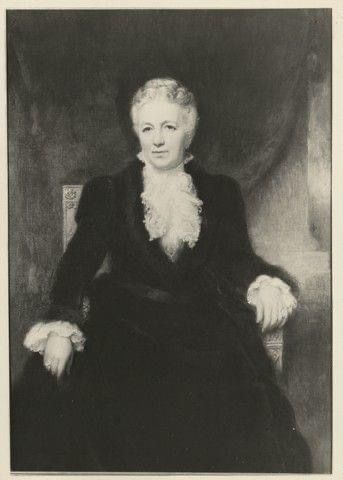
Key figure
Anna Maria (Richardson) Harkness
1837–1926
- Born October 25, 1837 · Dalton, Wayne County, Ohio, USA
- Married Florence Harkness Severance 1894 (Anna 57, Florence 30) · widowed 1895 · 1 year
- Died March 27, 1926 · age 88
Stephen's second wife; established the Commonwealth Fund after his death.
Stephen’s second wife; established the Commonwealth Fund (1918).
Philanthropy
Anna Maria (Richardson) Harkness's giving
Anna M. Harkness’s philanthropy grew from local acts of remembrance into a broad program of support for health, education, social welfare, religion, and culture. After her husband, Stephen V. Harkness, died in 1888, she inherited a large fortune and began giving on a wider scale. She later explained the purpose behind her most enduring institution as doing “something for the welfare of mankind.”
Giving in Cleveland
Some of Harkness’s earliest gifts were shaped by family loss. After her young daughter Jennie died, Anna and Stephen provided and furnished a memorial pavilion at Lakeside Hospital in Cleveland. Harkness later gave the hospital $50,000. She also endowed a chair in Biblical literature at Western Reserve University. When her daughter Florence died in 1895, Harkness and Florence’s husband, Louis Henry Severance, funded the Harkness Chapel at the university; it was dedicated in 1902.
Education, welfare, and culture
After moving to New York, Harkness widened her support to religious and social-service organizations, including Presbyterian causes and the State Charities Aid Association. In 1917, she gave Yale University $3 million in memory of her son Charles. The gift helped build a residential complex later known as Memorial Quadrangle, including Harkness Tower. In 1920, she gave Yale a further $3 million for faculty salaries.
Her support also reached institutions in New York and beyond. With her son Edward, she donated land for Columbia University’s medical center. She aided cultural institutions including the American Museum of Natural History, the New York Public Library, and the Metropolitan Museum of Art. Hampton and Tuskegee, institutions serving African American students, were among the educational causes that benefited from her philanthropy.
A foundation for lasting work
As requests for aid multiplied, Harkness and Edward concluded that a foundation could assess them more effectively than one person working alone. In October 1918, she established the Commonwealth Fund with an initial endowment of $10 million; Edward became its first president. She continued to add to the fund during her life and left it a bequest. Its work focused especially on health and medical institutions, while its beneficiaries also included social-welfare and educational organizations. Harkness’s choice of a purpose-driven name, rather than her own, reflected her stated aim of serving the public good.
By her death in 1926, Harkness had given away tens of millions of dollars while continuing to support charitable causes through her estate. Her legacy endures in the Commonwealth Fund and in the hospitals, university buildings, educational programs, and cultural institutions her gifts helped sustain.
Sources: centennial.commonwealthfund.org, case.edu, encyclopedia.com