
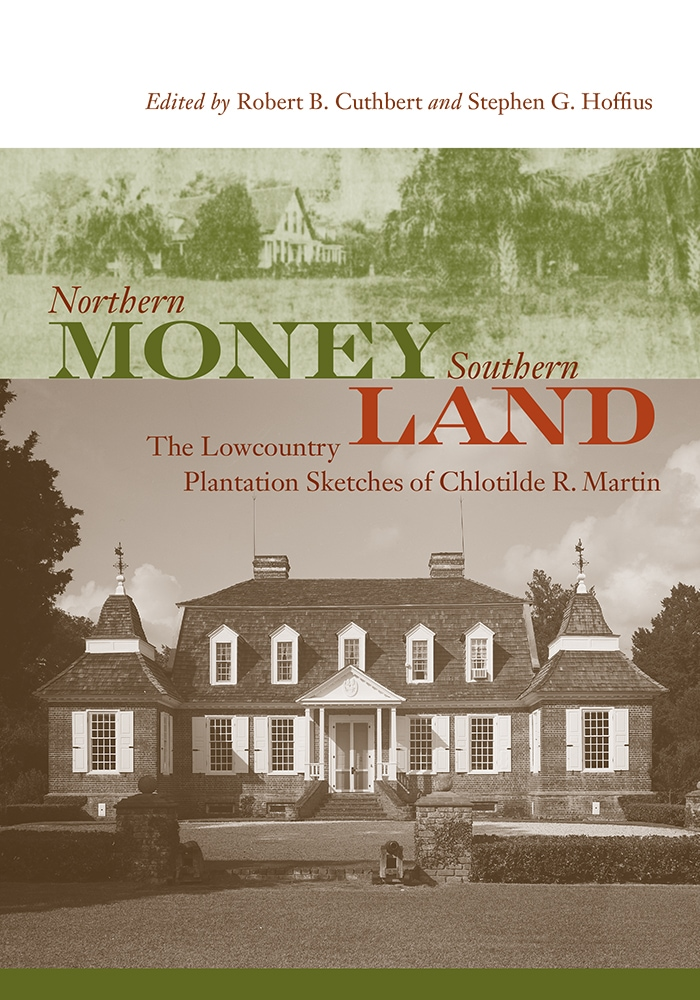
Historical article
When the Lowcountry Became America’s Private Hunting Preserve
By the late nineteenth and early twentieth centuries, the South Carolina Lowcountry had quietly transformed into one of America’s most exclusive sporting landscapes.
November 12, 2026
By Don C. Schueler7 min readInterwar Era · 1930sBy the late nineteenth and early twentieth centuries, the South Carolina Lowcountry had quietly transformed into one of America’s most exclusive sporting landscapes. Former rice plantations, long battered by war, emancipation, and economic decline, found new life as private hunting preserves.
Northern industrialists and financiers—the architects of the Gilded Age—were drawn south by abundant wildlife, mild winters, and vast tracts of land that could be purchased and reshaped into personal sporting domains.
The Geography of Privilege: Rivers over Borders
While these estates are often grouped under “Beaufort,” they actually span a complex network of four counties: Beaufort, Jasper, Colleton, and Georgetown. The true boundaries of this sporting empire were defined not by county lines, but by the great river systems: the Combahee, Chechessee, May, and Waccamaw.
The Jasper County Giants: Chelsea and Okeetee
Two of the most significant sporting institutions sat in what is now Jasper County, a region that became a favorite for the Chicago and New York elite.
Chelsea Plantation (Jasper County): Purchased in 1937 by Marshall Field III, the Chicago retail magnate. Field transformed this site on the Chechessee River into a premier hunting retreat. Though technically in Jasper, its social gravity pulled in guests from across the entire Lowcountry network.
The Okeetee Club (Jasper County): Established in 1894, Okeetee was a massive 50,000-acre private club. Its clubhouse and surrounding buildings were designed by the legendary Gilded Age architect Stanford White. It served as the ultimate exclusive hub for sportsmen who preferred a club atmosphere over a single-family estate.
George Widener purchased Jenkins Plantation, Rocky Point Plantation, Lockwood Plantation, Bull Bluff Plantation and Mackay Point Plantation. He combined the properties into one large plantation and retained the Mackay name.
The Combahee Corridor: A Social Neighborhood
The Combahee River served as the prestigious dividing line between Beaufort and Colleton counties. Here, neighbors didn’t drop by on foot; they visited by boat or carriage.
Cherokee Plantation (Colleton County): Developed by William Robertson Coe, this was the architectural jewel of the Combahee.
Airy Hall (Colleton County): Owned by Robert G. Elbert, it was one of the few preserves to feature its own private golf course.
Bindon Plantation (Beaufort/Jasper border): Owned by the Lorillard tobacco heirs, it remains a model of early 20th-century land management.
Further reading
As an Amazon Associate, we earn from qualifying purchases — at no cost to you.

Duck Blinds and Diplomats: The High-Stakes Social Scene
These were not just places to hunt; they were “off-the-record” headquarters for global power.
Bernard Baruch’s Hobcaw Barony was the epicenter of this political sporting life. Baruch, an advisor to seven U.S. presidents, hosted Sir Winston Churchill in 1932 (where the statesman recuperated after a car accident). Most famously, President Franklin D. Roosevelt spent a full month at Hobcaw in 1944. It was during this “working vacation” in the Lowcountry that FDR finalized Allied plans for the D-Day invasion.
At Chelsea Plantation, Marshall Field hosted a similarly elite roster of Chicago and New York industrialists, while Palmetto Bluff, owned by the Wilson family, served as a sprawling 20,000-acre retreat for the era’s most prominent financiers.
The Master Reference: Sporting Estates by Location
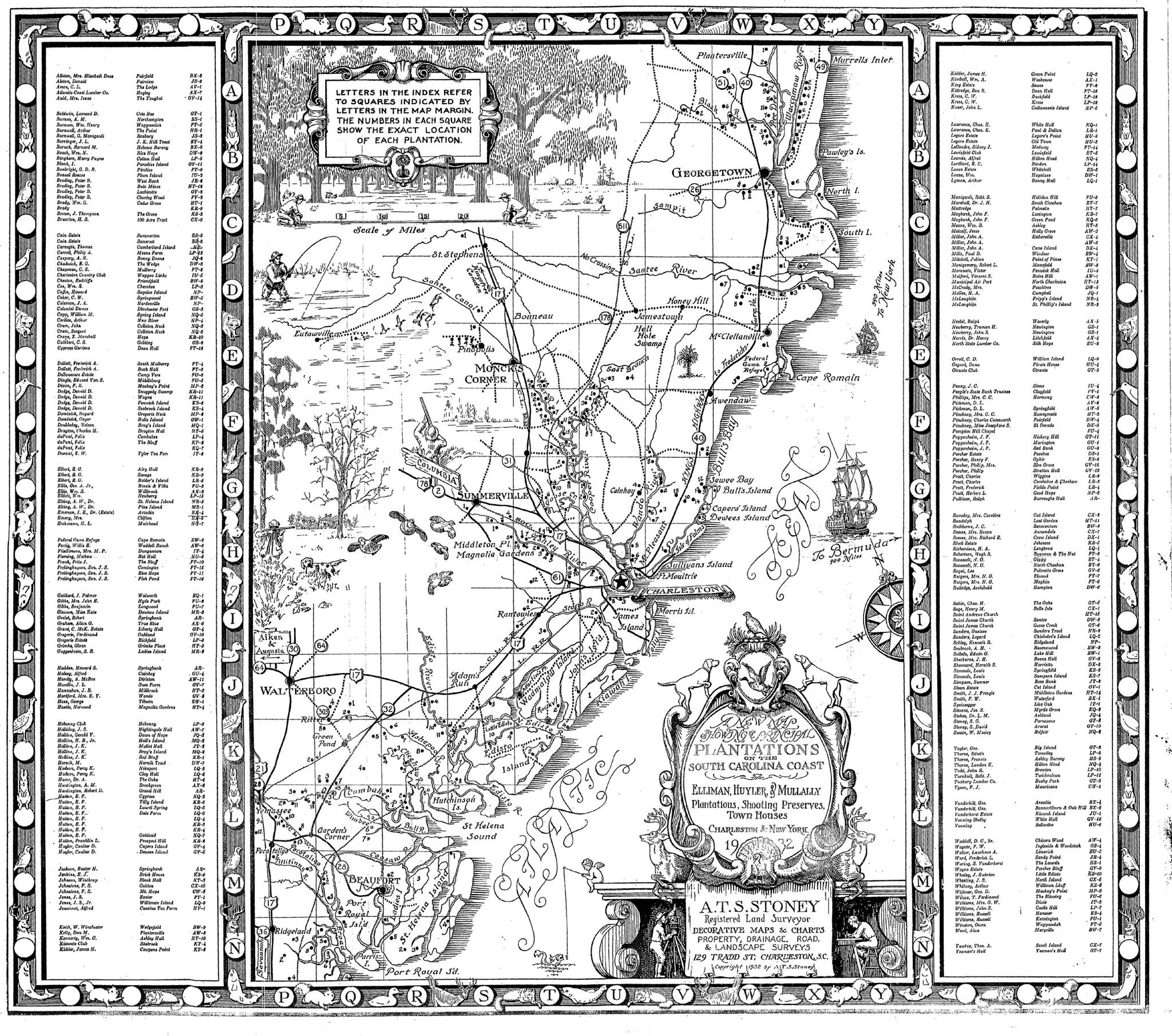
Jasper County (The Gateway to the South)
Okeetee Club – A consortium of Northern industrialists. Its 50,000 acres made it one of the largest private hunting clubs in the world.
Chelsea Plantation – Marshall Field III. Heir to the Marshall Field & Co. department store fortune; he was a powerhouse in Chicago retail and publishing.
The Delta (Savannah River) – H. Kierstade Hudson. A prominent Wall Street investment banker and partner at C.I. Hudson & Co.
Good Hope Camp – Herbert L. Pratt. A top executive at Standard Oil and son of the founder of the Pratt Institute.
Strawberry Hill – John F. Harris. Co-founder of Harris, Upham & Co., a massive brokerage firm that helped define the early 20th-century stock market.
Beaufort County (The Island & River Retreats)
Belfair – William Moseley Swain. His family founded the Philadelphia Public Ledger, one of the most influential newspapers of the 19th century.
Palmetto Bluff (May River) – R.T. Wilson Jr. A New York financier whose sisters married into the Astor and Vanderbilt families, cementing his place in the “Four Hundred” of elite society.
Hilton Head Preserve – William P. Clyde. Owner of the Clyde Steamship Company, which dominated coastal trade along the Atlantic seaboard.
Cotton Hall – Harry Payne Bingham. An heir to the Standard Oil fortune and a renowned philanthropist and oceanographic researcher.
Honey Horn (Hilton Head) – Landon K. Thorne & Alfred L. Loomis. Cousins and investment bankers who pioneered the modern private equity model and funded early radar research.
White Cottage (Broad River) – Henry W. Corning. A member of the influential Corning family, founders of Corning Glass Works.
Tomotley Plantation – “Sugar King” Henry O. Havemeyer of the American Sugar Refining Company and the Bostwick family, whose fortune originated with Standard Oil founding partner Jabez A. Bostwick.
Colleton County (The ACE Basin Heartland)
Cherokee Plantation – William Robertson Coe. A titan of the marine insurance industry and a legendary horticulturalist.
Airy Hall – Robert G. Elbert. A wealthy New York investor who developed Belmont Park and was a major figure in American horse racing.
White Hall Plantation – Charles L. Lawrance. An aeronautical engineer who designed the engine for Charles Lindbergh’s Spirit of St. Louis.
Bonnie Doone – A.H. Caspary. A highly successful New York stockbroker and world-renowned philatelist (stamp collector).
Laurel Spring – Edward F. Hutton. Co-founder of the brokerage firm E.F. Hutton and husband to cereal heiress Marjorie Merriweather Post.
Pine Island – Dr. A.W. Elting. A distinguished pioneer in American surgery and a leader in the medical academic community.
Georgetown County (Waccamaw & Pee Dee)
Hobcaw Barony – Bernard Baruch. A legendary Wall Street speculator and “Park Bench Statesman” who advised seven U.S. Presidents.
Arcadia Plantation – The Vanderbilt Family. The most famous name in the Gilded Age, their fortune was built on shipping and railroads.
Poco Sabo – Daniel Guggenheim. A member of the family that controlled a global mining and smelting empire, also known for the Guggenheim Museums.
Mansfield Plantation – The Montgomery Family. Prominent Southern timber and shipping magnates who maintained the estate’s vast acreage.
Wedgefield – The Goelet Family. One of New York’s “old money” families, their immense wealth came from Manhattan real estate and banking.
Berkeley County (The Cooper River)
Cainhoy Peninsula – Harry Frank Guggenheim. Son of Daniel Guggenheim; he was a leader in aviation development and owner of the Triple Crown-winning Cainhoy Stable.
Medway Plantation – The Legendre Family. Famous adventurers and explorers who provided specimens for the American Museum of Natural History.
Rice Hope – Joseph S. Frelinghuysen. A U.S. Senator from New Jersey and a major figure in the American insurance industry.
Summary: The Gilded Age Legacy of the Lowcountry
The transformation of South Carolina’s coastal corridor from a war-torn agrarian economy to an exclusive sporting empire represents one of the most significant demographic shifts in Southern history. Between 1890 and 1940, the collapse of the rice industry provided a vacuum filled by the titans of the Gilded Age—names synonymous with American industry: Vanderbilt, Guggenheim, Field, and Rockefeller.
These “Sporting Squires” did more than just hunt; they preserved. By consolidating fragmented, decaying plantations into massive tracts like the 50,000-acre Okeetee Club, they inadvertently saved the Lowcountry’s unique ecosystems from the industrial sprawl and intensive development that transformed other parts of the Atlantic coast.
Key Takeaways of the Sporting Era:
Economic Restoration: Northern capital flowed into some of the most impoverished counties in the South, creating a specialized service economy centered on land management, hospitality, and traditional crafts like boatbuilding and dog training.
Social Architecture: The Lowcountry became a “Southern Capital” for the New York and Chicago elite. Estates like Hobcaw Barony and Chelsea Plantation functioned as informal embassies where global policy—including strategies for World War II—was debated in duck blinds and at dinner tables.
Architectural Heritage: The influx of wealth brought world-class design to the marshes, with legendary architects like Stanford White creating a new “Plantation Style” that blended Southern tradition with Northern luxury.
Conservation Paradox: While established for private recreation, these estates laid the groundwork for modern conservation. Many of these original sporting tracts now form the core of the ACE Basin National Estuarine Research Reserve and other protected wilderness areas, ensuring the “Geography of Privilege” remains a sanctuary for wildlife today.
Ultimately, the sporting era redefined the Lowcountry as a place of quiet power and rugged leisure, cementing a legacy where the flow of the great rivers—the Combahee, the May, and the Waccamaw—continues to dictate the rhythm of life in South Carolina.