
Historical article
Pete Bostwick in the SC Lowcountry
The name Bostwick can be found throughout South Carolina from Aiken to Haig Point near Hilton Head, SC.
The name Bostwick can be found throughout South Carolina from Aiken to Haig Point near Hilton Head, SC.
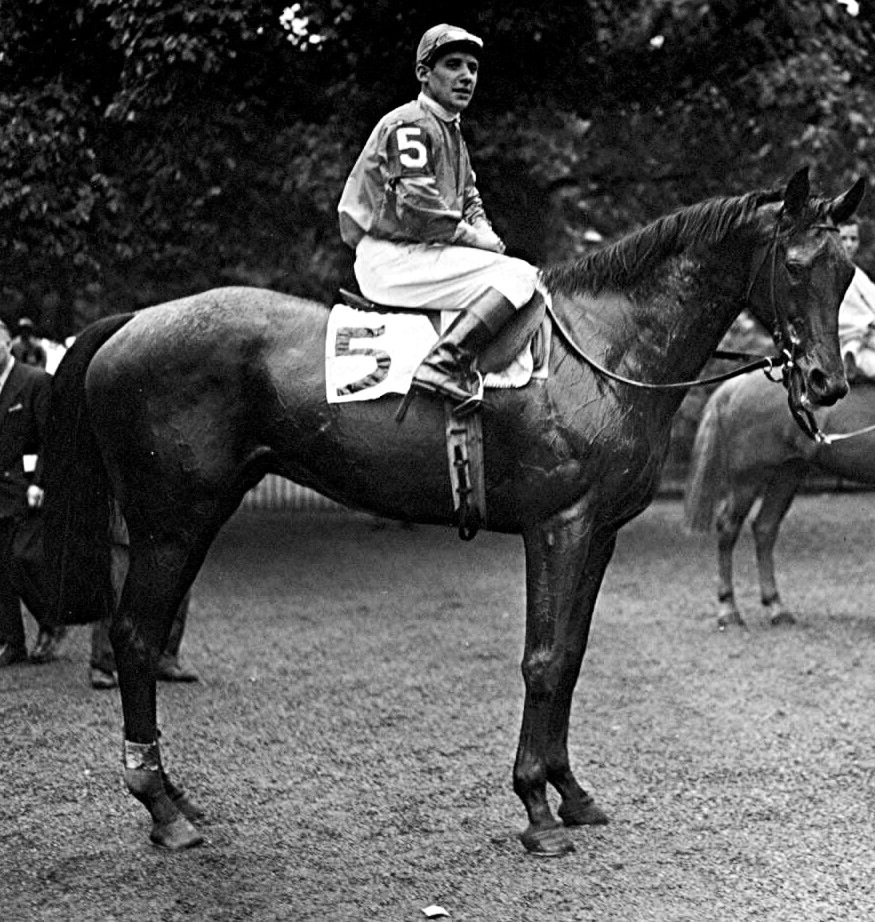
George Herbert “Pete” Bostwick (1909–1982) was the ultimate “Gentleman Jockey”—a Standard Oil heir who traded a life of leisure for the rigors of competitive horsemanship. While born to a New York fortune, Bostwick’s legacy is rooted in the red clay of Aiken and the maritime forests of the South Carolina Lowcountry along with many other Northerners.
The Aiken Education
Pete’s path was shaped by his uncle, F. Ambrose “Brose” Clark, an eccentric horseman from the Singer Sewing Machine family, who famously preferred carriages to cars. Under Clark’s mentorship, Pete attended Aiken Preparatory School, where the curriculum prioritized riding as much as reading. It was here that Pete famously remarked, “There is no use sitting in school when one can sit on a horse and go somewhere.” This bond was so strong that Clark eventually left his historic Aiken estate, “Kellsboro,” to Pete.
Accomplishments of George Herbert “Pete” Bostwick (1909–1982)
Horse Racing & Steeplechase
National Museum of Racing Hall of Fame: Inducted in 1968 as a jockey.
Champion Amateur Steeplechase Rider: Ranked as the #1 amateur rider in North America for six years (1928, 1929, 1930, 1931, 1932, and 1941).
Champion Steeplechase Trainer: Ranked as the leading trainer in earnings three times (1940, 1951, and 1955).
Dual-Win Feat: In 1932 at Belmont Park, he became one of the very few jockeys to win both a “flat” race and a steeplechase race on the same day—a feat he repeated two weeks later.
English Success: He was one of the first Americans to compete in the prestigious English Grand National and won the English Imperial Cup (1933).
Eclipse Award Winner: Owned and trained multiple horses that won the Eclipse Award (the “Oscars” of horse racing), including Oedipus and Neji.
Polo
Museum of Polo Hall of Fame: Inducted posthumously in 1996.
U.S. Open Polo Champion: Won the U.S. Open Championship six times (1937, 1939, 1941, 1946, 1948, and 1950).
8-Goal Rating: Attained an 8-goal handicap, placing him among the elite players in the world.
“Polo for the Public”: Founded Bostwick Field on Long Island, where he popularized the sport by charging only 50 cents for admission, allowing the general public to watch matches previously reserved for the elite.
International Competitor: Represented the United States in the 1936 Cup of the Americas and the 1949 World Championship.
General Sportsmanship
Versatility: At only 5′4″ and 110 lbs, he was known for his physical toughness, often competing in high-impact sports against much larger men.
Inductee: Member of the Aiken Thoroughbred Racing Hall of Fame and the Nassau County Sports Hall of Fame.
The Lowcountry Land King
Beyond the stables, Bostwick was a massive figure in South Carolina real estate. Managed by Manning Woods of Bluffton, Bostwick owned over 25,000 acres in Beaufort County, including Tomotley Plantation, Haig Point and Hogg Plantation.
His most significant preservation effort was at Haig Point on Daufuskie Island which he bought from Stiles Harper of Estill,SC. Stiles had bought the land in 1957 for $44,000 and sold it to Bostwick in 1961 for $134,187. Harper retained 15 acres that he later sold for $750,000. Between 1961 and 1965, Bostwick reunited the fractured estate, including the historic lighthouse. While his 1967 renovations were more functional than “historically accurate,” they saved the structure from collapse. This stewardship protected the ground where, years later, archaeologists discovered the ruins of a massive 18th-century tabby mansion hidden beneath the lighthouse kitchen. The Bostwicks sold Haig Point in 1980 for $2,875,000.
The Final Ride
Pete Bostwick died as he lived. In 1982, at age 72, he suffered a fatal heart attack mid-match while playing polo in Palm Beach. He was returned to Aiken for burial, resting in the town he helped establish as the “Polo Capital of the South.” From the oak alleys of Tomotley to the shores of Daufuskie, his influence remains an indelible part of South Carolina’s sporting history.