
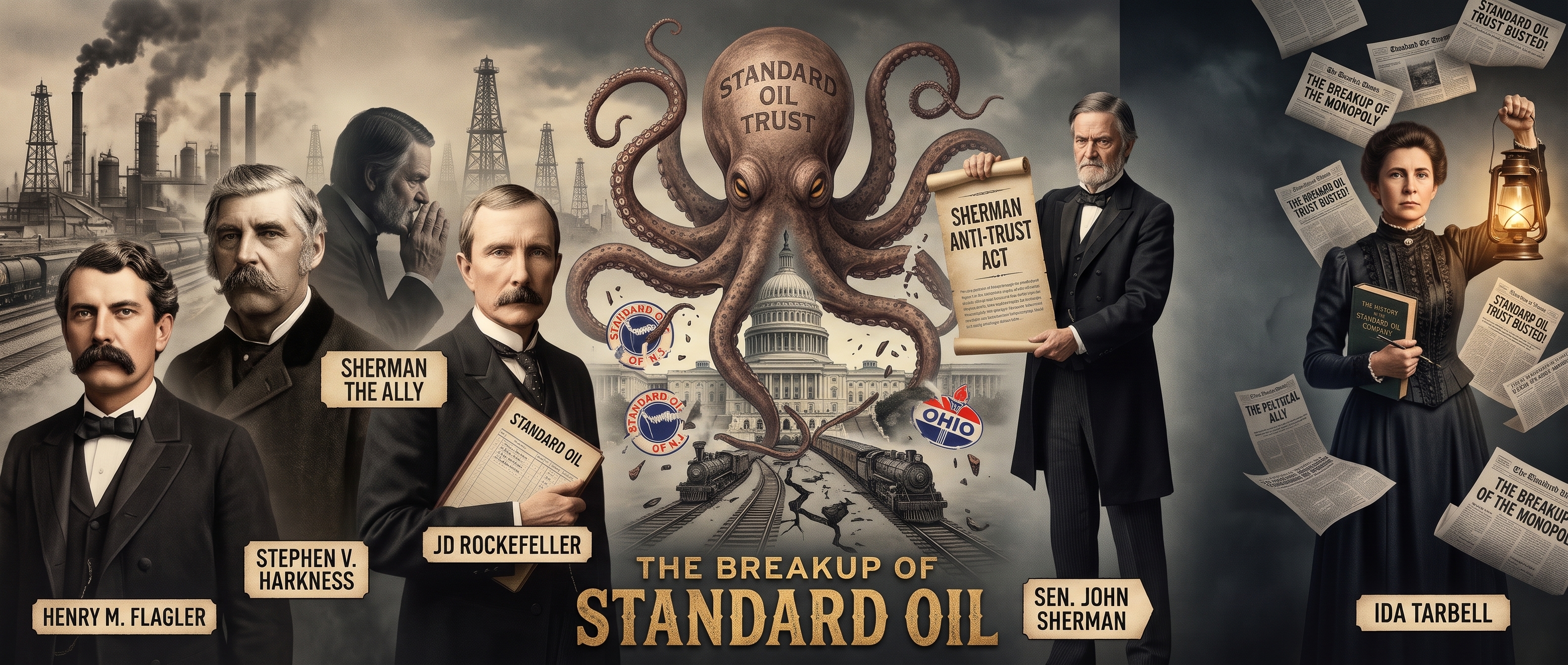
Historical article
Monopoly, Muckrakers, and Irony: The Rise, Reign, Breakup and Resurrection of Standard Oil
In early 1872, John D. Rockefeller acquired most of Cleveland’s refining competitors. The episode reshaped the oil industry—and remains central to debates over monopoly and antitrust.
The rise and fall of Standard Oil is a study in contradictions—from a secret whiskey tax tip that funded its birth, to the six-week "Cleveland Massacre" that forged its monopoly, to Ida Tarbell's exposé that led to its 1911 breakup into 34 companies (which ironically tripled John D. Rockefeller's fortune). Standard Oil was simultaneously a ruthless corporate bully that rigged markets and corrupted politics, and an unmatched industrial innovator that saved a collapsing market and dropped kerosene prices by over 70% for everyday consumers.
The story of John D. Rockefeller’s Standard Oil sits at the heart of America’s oldest debate over capitalism: When does ruthless efficiency cross the line into predatory monopoly? From its insider-funded origins to its billionaire-making dissolution, Standard Oil’s history is defined by paradoxical truths.
1. An Insider-Funded Beginning: The 1862 Whiskey Tip
Before Standard Oil became the ultimate symbol of corporate power, its seed capital came from a quiet tip by the very politician who would later write the law to destroy it.
The Tip-Off: In 1862, during the Civil War, Ohio Representative John Sherman (brother of Union General William Tecumseh Sherman) tipped off his close friend Stephen V. Harkness—Henry Flagler’s wealthy stepbrother—that Congress was about to pass a steep excise tax on distilled spirits.
The Corner: Armed with advance notice, Harkness bought up every barrel of whiskey he could find across Ohio before the tax took effect. When prices jumped overnight, Harkness netted a fortune.
Bankrolling Standard Oil: In 1867, and formally upon Standard Oil’s incorporation in 1870, Flagler brought Harkness in as a silent partner. Harkness invested roughly $70,000 to $100,000, becoming the second-largest shareholder behind Rockefeller and providing the essential liquidity that powered Standard Oil's initial expansion.
2. The Cleveland Massacre (1872)
By 1871, the American oil refining industry was collapsing under ruinous overcapacity. Refining capacity outweighed demand by nearly three to one; kerosene prices had cratered, and 90% of Cleveland’s 26 refineries were losing money.
Rather than endure a slow, mutually destructive price war, Rockefeller and Flagler quietly increased Standard Oil’s capital to $2.5 million in January 1872 and launched a six-week acquisition blitz. Between mid-February and late March 1872—buying six refineries in a single 48-hour stretch—Standard Oil absorbed 22 of its 26 local competitors, instantly capturing roughly 25% of all U.S. refining capacity. Was this ruthless capitalism or was it a genius stroke to save the industry and bail out weaker competitors amid the glut, many of whom were likely already in receivership but didn't know it? Keep reading...
Stock vs. Cash: A Generational Divide
Rockefeller approached each rival with his appraisers, offering a binary choice: take Standard Oil stock or take cash. He actively encouraged them to take the stock, famously telling holdouts, "I advise you to take the stock. It will be for your good."
Took Stock: Sellers became partners in the Standard Oil Trust, and key executives like Oliver H. Payne stayed on in leadership. As Standard Oil’s stock value and dividends exploded over the next four decades, these former rivals became multi-millionaires and Gilded Age titans in their own right.
Took Cash: Sellers received appraised asset value—often 40 to 50 cents on the dollar relative to what they had spent building their plants. They took an immediate capital loss, exited the market at the absolute bottom, and spent decades bitterly watching Standard Oil skyrocket without them.
The South Improvement Company: The Three-Month Scare
To convince Cleveland refiners that resistance was futile, Rockefeller leveraged the South Improvement Company (SIC)—a secret cartel formed in late 1871 by major refiners and railroads led by the Pennsylvania Railroad’s Thomas Scott.
The Secret Deal (January 18, 1872): SIC members were promised 40–50% shipping rebates plus "drawbacks"—cash kickbacks paid by the railroads to the SIC for every barrel shipped by non-member competitors.
The Backlash (February 25, 1872): When the secret leaked to the press, Pennsylvania crude producers launched "The Oil War of 1872," boycotting all SIC refiners.
The Collapse (March 25–April 2, 1872): Facing national outrage and congressional inquiries, the railroads canceled their SIC contracts on March 25, and the Pennsylvania legislature revoked its charter on April 2. Though the SIC lasted barely three months and never shipped a single drop of oil, the threat of its existence had already accomplished Rockefeller’s goal in Cleveland.
3. Ida Tarbell and the Reality of Standard Oil
The phrase "Cleveland Massacre" was popularized decades later by muckraking journalist Ida Tarbell in her landmark 1904 exposé, The History of the Standard Oil Company. Tarbell spent five years digging through tens of thousands of pages of court records and congressional testimony. Her documentary evidence was so airtight that Rockefeller privately warned associates, "Not a word about that misguided woman"—because he could not refute her paper trail.
Further reading
As an Amazon Associate, we earn from qualifying purchases — at no cost to you.
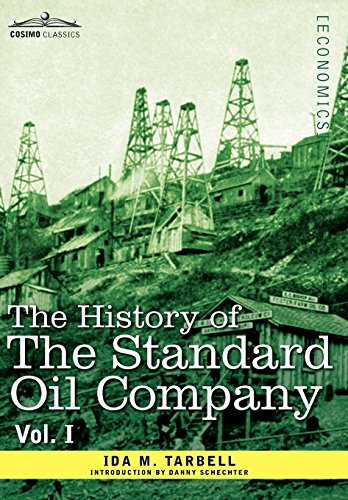

However, modern historians note that Tarbell carried an undisclosed personal grudge (her father, Franklin Tarbell, was an independent oil producer ruined during the 1872 crisis, and her brother worked for rival Pure Oil) and selectively omitted Standard Oil’s economic benefits. To judge how "bad" Standard Oil actually was, you have to weigh both sides of its ledger:
Where Standard Oil Was Genuinely PredatoryWhere Standard Oil Was Actually BeneficialRigged Freight & Rebates: Competitors were forced to pay higher shipping rates that directly subsidized Standard Oil’s rebates.70%+ Drop in Consumer Prices: Standard drove kerosene from 58 cents/gallon (1865) down to under 8 cents/gallon (1890), bringing affordable lighting to working-class homes.Industrial Espionage: Standard paid railroad and telegraph clerks to leak rivals' customer lists and manifests so agents could undercut shipments before arrival.
Safety and standardization: Before Standard Oil, inconsistent kerosene routinely exploded in household lamps. Rockefeller hired top chemists to standardize fuel and turn waste byproducts (like gasoline and Vaseline) into useful goods.Localized Predatory Pricing: Standard slashed prices below cost in single towns to bankrupt independent rivals, then raised prices back up once the competitor folded. Saved a Collapsing Industry: Consolidation eliminated wasteful duplication and chaotic boom-and-bust cycles, building an export powerhouse that beat Russian and Dutch rivals globally.Political Corruption & Blockades: Standard kept lawmakers and judges on secret retainers and used legal and physical blockades to stop independent pipelines.Fair Market Buyouts: Contrary to Tarbell’s famous claim that Rockefeller swindled a Cleveland widow (Mrs. Backus), records show he paid $79,000 for a refinery appraised at $60,000.
4. The Ultimate Irony: How Breaking Up Standard Oil Tripled Rockefeller’s Fortune
Tarbell’s reporting became the literal blueprint for the federal government’s antitrust prosecution under the Sherman Antitrust Act of 1890—authored by Senator John Sherman, the very same man whose 1862 whiskey tip had helped fund Standard Oil’s creation.
In May 1911, the U.S. Supreme Court ordered Standard Oil dissolved into 34 independent companies—the ancestors of today’s energy giants, including ExxonMobil (Standard of New Jersey and Socony), Chevron (Standard of California), BP (Amoco and Sohio), ConocoPhillips (Conoco), and Marathon Oil (Ohio Oil).

Wall Street initially panicked at the breakup, prompting Rockefeller to famously tell his golf partner, "Father Time will look after us"—and advise him to buy Standard Oil stock. He was right:
Pro-Rata Ownership: Rockefeller received proportional shares in all 34 new companies.
Unlocking Trapped Value: Freed from constant federal litigation and bureaucratic drag, the 34 individual companies were aggressively managed for growth, causing their combined market value to far exceed that of the single parent trust.
The Automotive Boom: The 1911 breakup coincided with Henry Ford’s Model T putting millions of cars on American roads, instantly transforming gasoline from a refining byproduct into the world’s most valuable commodity.
Within a few years of the Sherman Antitrust breakup, John D. Rockefeller’s personal net worth more than tripled—jumping from roughly $300 million in 1911 to nearly $1 billion (making him America’s first billionaire and worth over $400 billion in today’s dollars). An example of unintended consequences.
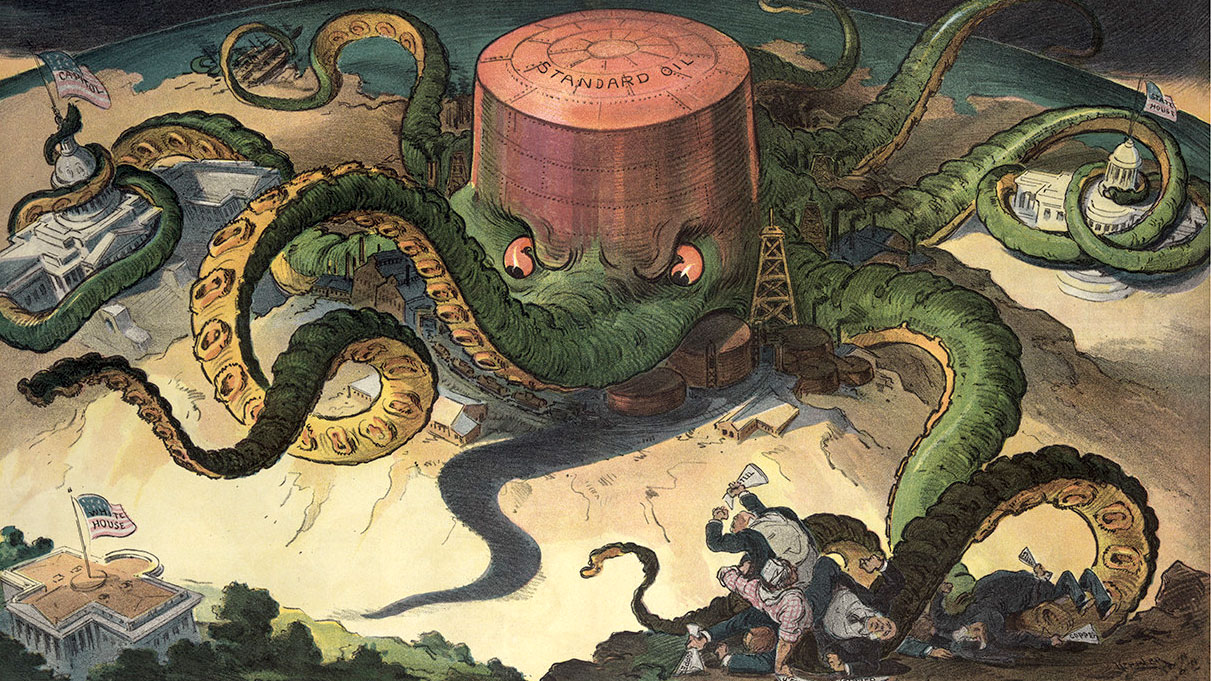
Robber Baron – Yes or No?
Did the Gilded Age have robber barons? Certainly, much like the current era.
The Verdict
If Standard Oil operated today, its executives would face immediate criminal indictments for commercial bribery, corporate espionage, and price-fixing. Yet in the lawless Wild West of 1870s capitalism, Rockefeller wasn't the only businessman playing dirty—he was simply the most disciplined and visionary player in the game. Ida Tarbell was right that Standard Oil posed an existential threat to free competition and democratic institutions; Rockefeller’s defenders are right that his operational genius built the modern energy infrastructure that powered the 20th century, kept kerosene prices low for consumers and helped save many failing businesses and make their stockholders wealthy (the ones who took Standard Stock).