Historical article
St. Andrews, Scotland and Pilgrim Trust – Edward Harkness
One of my favorite places on this earth is Scotland – more specifically, St. Andrews, Scotland.
One of my favorite places on this earth is Scotland – more specifically, St. Andrews, Scotland.
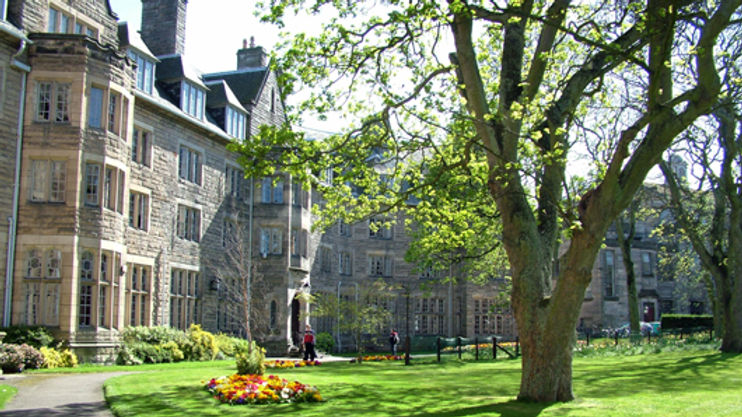
Edward "Ned" Harkness held on to his Scottish roots and made multiple philanthropic contributions to Scotland and the UK including St Salvator’s Hall aka “Sallies”(where Prince William and Princess Kate met) at the University of St. Andrews and St. Salvator’s Chapel.
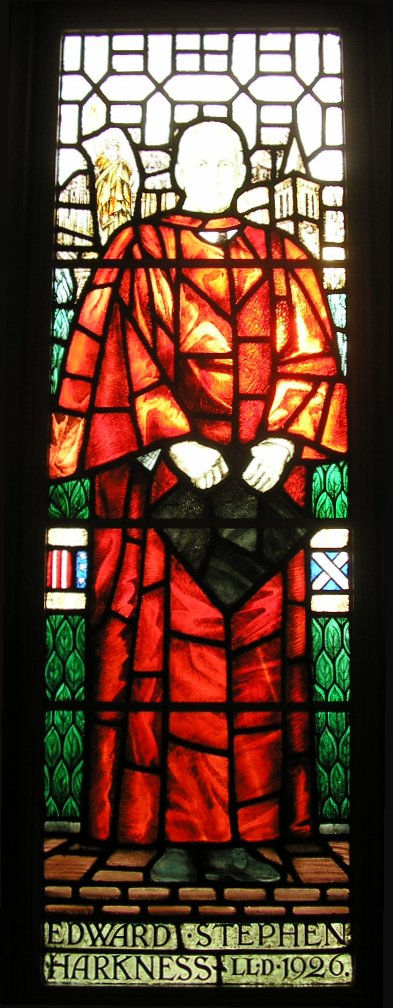
Stained glass window inside St. Salvator’s Hall commemorating Edward S. Harkness’s financial gift that built the hall.
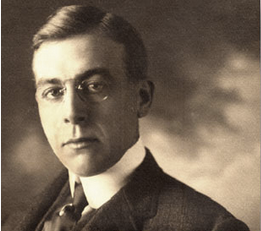
Edward S. Harkness gives away the family fortune
Detailed Life Events Born January 22, 1874 in Cleveland, Ohio Died January 29, 1940 (aged 66) Resting place Woodlawn Cemetery Bronx, New York Education St.
St. Salvator’s Hall video
St. Salvator’s Chapel
The chapel is a rare and beautiful example of Late Gothic architecture. Founded in 1450 as a part of Bishop James Kennedy’s College of the Holy Saviour, the Chapel of St Salvator has had a long and varied history.
Originally founded with a missionary as well as an educational function, St Salvator’s College stands out among the many similar medieval foundations of Europe. Unlike the colleges of Oxford and the continent, Kennedy’s institution was very much a part of the local community. Furthermore, it was intended to have a national role through the improvement of the theological education of the Scottish clergy. Thus, unlike the secluded colleges of Oxford, St Salvator’s presents its face to the wider world, as can be seen most spectacularly in the chapel.
The main entrance to the chapel faces out onto the street and not into the college courtyard. From its beginnings, the building had a dual role both as the college chapel and as a collegiate church serving the wider community. Despite the violent history of religion in St Andrews, the chapel remains a central focus for worship both within the University and the wider world. Nevertheless, history has left its marks on the building.
The cobbles beneath the bell tower bear witness to the turbulent events of the 16th century. The initials ‘PH’ set into the cobbles mark the site where 24-year-old Patrick Hamilton (died 1528) was burnt at the stake for his Protestant beliefs.
Thanks to a generous sum gifted to the University by Dr. Edward S. Harkness, new stained glass windows were commissioned from the leading Scottish artists of the day.
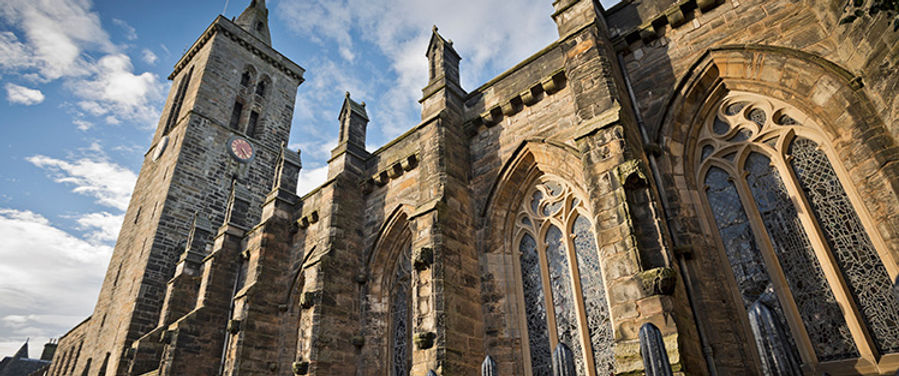
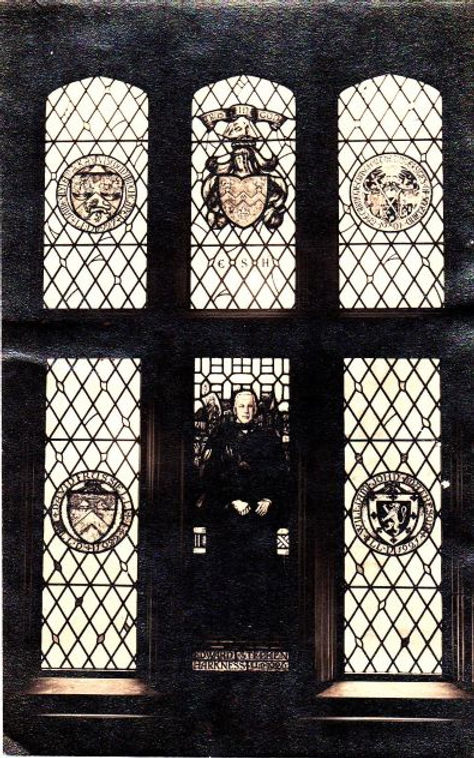
Stained glass window commemorating Edward Harkness inside St. Salvator’s Chapel, St. Andrews, Scotland
Interior video of St. Salvator’s Chapel, St. Andrews, Fife, Scotland
The Pilgrim Trust
The Pilgrim Trust is a national grant-making trust in the United Kingdom. It is based in London and is a registered charity under English law. It was founded in 1930 with a two-million-pound grant by Edward Harkness. The trust’s inaugural board were Stanley Baldwin, Sir James Irvine, Sir Josiah Stamp, John Buchan and Hugh Macmillan its first secretary was former civil servant, Thomas Jones.
Today, the trust makes grants of roughly 2 million pounds each year. Around 60% of these funds are given to preservation projects, particularly those aimed at preserving the fabric of architecturally or historically significant buildings, or those aimed at preserving historically interesting artifacts or documents. The trust has a particular interest in the preservation of historic churches and their contents. The remaining funds are allocated to social welfare causes, particularly projects which assist those misusing alcohol and drugs, and projects in prisons, including those that seek alternatives to custody. The trust is a principal contributor to the collaborative National Cataloguing Grants Scheme operated in conjunction with The National Archives.